

Most SaaS “growth” plans fail because the funnel leaks after the first click-free trials stall, demos no-show, and qualified traffic turns into expensive churn.
After auditing dozens of SaaS checkout, trial, and demo flows this quarter, I keep seeing the same pattern: teams buy more ads to “fix” a conversion problem rooted in unclear value, friction-heavy onboarding, and weak activation. The cost isn’t theoretical; it’s wasted CAC, longer payback, and missed runway.
Below is a field-tested set of conversion optimization techniques to lift trial-to-paid and lead-to-demo rates-covering messaging hierarchy, page-level UX fixes, pricing and packaging tests, onboarding triggers, and experiment design you can ship without rebuilding your product.
High-Intent SaaS Landing Pages: Message-to-Market Match, Objection Handling, and Offer Framing That Lift Trial-to-Paid Conversions
High-intent SaaS landing pages fail most often because the hero section speaks to features, not the buyer’s job-to-be-done, and trial-to-paid drops even when signups look healthy. If your PPC keyword promises “SOC 2 evidence automation” but your page sells “workflow flexibility,” you’ve already lost message-to-market match.
| Landing Page Element | What to Say (High-Intent) | How It Lifts Trial-to-Paid |
|---|---|---|
| Above-the-fold promise + proof | Outcome, timeframe, and hard constraint (e.g., “Generate audit-ready evidence in 14 days”) plus 1 quantified proof point | Pre-qualifies buyers so activation aligns with purchase criteria, not curiosity |
| Objection blocks | Security, migration, and pricing risk: architecture diagram, data handling, “works with X,” and transparent guardrails | Reduces “trial stalled” tickets and accelerates legal/IT sign-off |
| Offer framing | Map trial CTA to a concrete milestone (“Connect 2 systems → see evidence gaps”) and show what’s included vs. paid | Creates a paid-forward activation path instead of open-ended exploration |
Field Note: After instrumenting page-level intent segments in Mutiny and swapping a generic “Start free trial” CTA for “Import your Jira + GitHub to get a risk report,” we eliminated a misleading pricing objection that was triggered by a hidden SSO requirement.
Frictionless Signup and Checkout Optimization: Reduce Form Fields, Improve Pricing Page Clarity, and Add Trust Signals to Stop Drop-Off
Most SaaS drop-off happens before users ever see value: every extra input in signup or checkout is another failure point for autofill, validation, and trust. The common mistake is collecting billing address, role, and “how did you hear about us” upfront-then wondering why paid conversions lag.
- Reduce form fields: Default to email + password (or SSO), defer company size/role to in-app onboarding, and use progressive profiling; audit friction with Hotjar session replays to spot rage-clicks and repeat validation errors.
- Improve pricing-page clarity: Show one primary plan per persona, clearly indicate “per seat/per month,” include a calculator for annual vs monthly, and keep core feature differences above the fold; remove hidden limits that trigger last-minute objections.
- Add trust signals: Display security badges (SOC 2/ISO 27001), refund/cancellation terms near the CTA, and visible payment methods; reinforce reliability with uptime/SLA links and real customer logos tied to the target segment.
Field Note: After removing a “confirm password” field and fixing a failing ZIP-code validator that blocked non-US cards, a client’s Stripe checkout completion rate jumped within 48 hours.
Activation-Driven Onboarding Experiments: Product-Led Flows, Lifecycle Emails, and Behavioral Nudges to Turn New Trials Into Revenue
Most SaaS trials fail because onboarding optimizes for “feature tours” instead of the activation event that predicts retention (e.g., first integration, first collaborator, first report shipped). If you don’t instrument activation and drive users to it within the first 24-72 hours, lifecycle email and in-app prompts become noise rather than revenue levers.
| Experiment | Trigger | Success Metric |
|---|---|---|
| Product-led guided flow to “Aha” | Signup → first session | % reaching activation milestone in session 1 |
| Lifecycle email sequence (behavioral) | No activation by T+6h / T+24h | Activation lift per cohort; time-to-value reduction |
| In-app nudge + checklist personalization | Repeated feature browsing without completion | Checklist completion rate; trial-to-paid conversion |
Use event-driven messaging (not day-based drips) so each email or tooltip corresponds to the next highest-probability step; tools like Customer.io let you branch on real-time behavioral events and suppress messages once activation is achieved. Field Note: After fixing a misfired “integration completed” event (it was firing on button click, not API success), the activation rate jumped 11% in one week because nudges stopped congratulating users who were actually stuck.
Q&A
Q1: Which conversion optimization techniques typically deliver the fastest lift for SaaS sign-ups and paid conversions?
Start with changes that remove friction and clarify value at the moment of decision:
- Tighten the above-the-fold message: One clear primary use case, outcome-based headline, and a single dominant CTA aligned to intent (e.g., “Start free trial” vs. “Book a demo”).
- Reduce form friction: Fewer fields, social sign-in/SSO where appropriate, progressive profiling after activation, and clear error handling.
- Improve trial-to-value speed (TTFV): Guided setup, templates/sample data, and “first success” checklists so users reach the aha moment quickly.
- Strengthen trust near CTAs: Customer logos, short testimonials tied to the same use case, security/compliance badges (only if legitimate), and transparent pricing.
- Fix pricing page leaks: Clear packaging, fewer ambiguous tiers, predictable limits, and an explicit path for “not sure” visitors (comparison table, FAQ, or chat).
Q2: How do we decide what to A/B test-and avoid misleading wins that don’t increase revenue?
Prioritize tests by business impact and measurement integrity:
- Start from a hypothesis tied to a metric that matters: e.g., “Reducing trial signup steps will increase activated trials and paid conversions,” not just clicks.
- Optimize for downstream metrics: Track activation, qualified pipeline, paid conversion, retention, and expansion-not only top-of-funnel CTR.
- Segment by intent: Self-serve vs. sales-led, SMB vs. mid-market, and source/channel. A “win” for one segment can be a loss overall.
- Control for sample size and run time: Run long enough to cover weekday/weekend cycles and avoid stopping early on noise.
- Guard against metric gaming: A higher trial signup rate can reduce lead quality; validate with activation rate and CAC-to-LTV effects.
Q3: Should we push free trial, freemium, or “book a demo”-and what optimization tactics work for each?
The best motion depends on product complexity, price point, buyer risk, and required onboarding:
| Motion | Best fit | High-impact optimization tactics |
|
Free trial |
Clear value quickly; moderate setup; buyer can self-evaluate |
|
|
Freemium |
High-volume acquisition; viral/collaboration loops; low marginal cost |
|
|
Book a demo |
Higher ACV; complex workflows; multiple stakeholders; trust/security review |
|
The Bottom Line on Conversion Optimization Techniques to Increase SaaS Sales
Pro Tip: The biggest mistake I still see SaaS teams make is “optimizing” in the dark-changing copy, pricing, or onboarding without isolating one variable and without tracking time-to-value. That’s how you get noisy wins that die the moment traffic mix shifts.
Before you run another test, lock a single North Star (activation or first paid conversion), and treat everything else as supporting signals-especially in-product behavior, not just page analytics.
Do one thing right now:
- Open your analytics, pull the last 30 days, and write down the 3 biggest drop-offs from: Visit → Trial/Checkout → Activation → First Value Event → Paid. Pick the largest one and schedule a 60-minute “fix-first” session with product + growth this week.
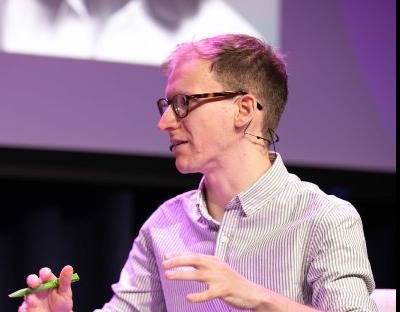
Dr. Matthew S. Reynolds is a leading expert in B2B digital ecosystems and cloud software. With a Ph.D. in Information Systems, he bridges the gap between scalable SaaS technology and strategic business networking, helping enterprises connect, automate, and grow.